Hi all, I’d like to acknowledge the Kaurna people, the Traditional Custodians of the lands and waters where I am writing today. I acknowledge their continued connection to Country, and pay my respects to their Elders past and present.
Welcome to BOLFA in the form of a blog! I’m chuffed to start this blog on the occasion of BOLFA’s 50th anniversary. We have uploaded a digital version of BOLFA #1 1976. To access it, scroll to the bottom of the main BOLFA page.
If you are a South Australian climber / boulderer or have a connection to SA and you’re interested in contributing a story to BOLFA, get in touch: bolfa@climbingclubsouthaustralia.asn.au
To begin, I’m stoked to share this Q & A with Stuart Williams. Happy climbing and reading – Kylie Jarrett, BOLFA editor
1. Tell us a bit about yourself and how you got into climbing.
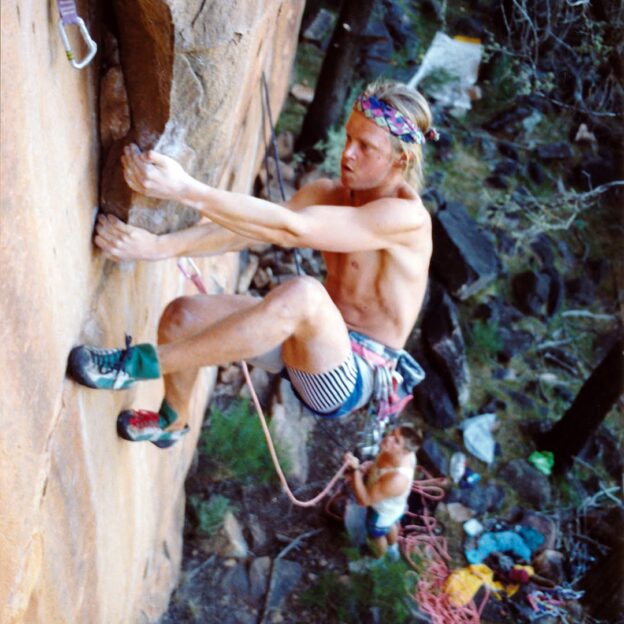
I’m Adelaide born, went to kinder here but moved to Melbourne for primary school, where I was a full-blown cricket and Aussie rules tragic. We moved back to Adelaide for high school, and in Year 9 at Pembroke they offered climbing at Morialta as a Friday afternoon elective (this was before climbing gyms), culminating in a trip to Arapiles. I was hooked straight away. We were supposed to do different electives each term, but after doing climbing in term one I ended up wagging the others and joining the climbing elective all year.
Over Christmas I bought Joe Friend’s Classic Climbs of Australia. There were no electives in Year 10, but I wanted to keep climbing, so I convinced my parents to buy me a rope for my birthday and some webbing to make a harness.
Much to my father’s displeasure, I started climbing before Saturday afternoon cricket and increasingly turning up late for games. He gave me a stern speech: “You better watch this climbing thing, it is beginning to interfere with your cricket.” Within a week I’d dropped cricket and football and was climbing every weekend.
2. What do you love about the sport?
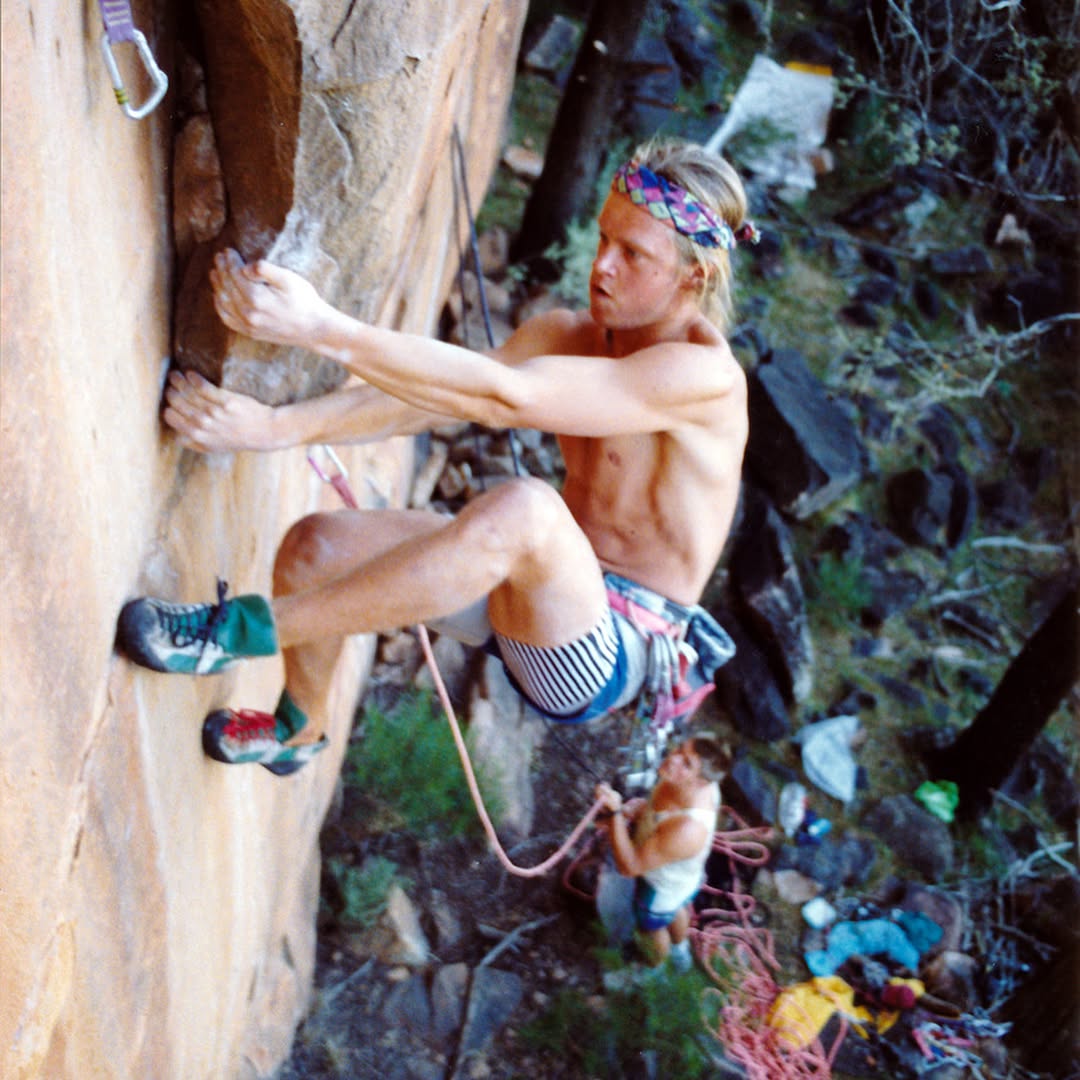
What’s not to love? On the purely gymnastic side, it’s a combination of physical, technical and mental challenges. I’ve also always enjoyed being technically and mentally proficient at trad climbing. There’s something uniquely satisfying about using gear well, and it adds another level to the mental challenge.
Then there are the places you get to go, the positions you find yourself in and seeing things that less than 0.001% of the population ever experience. Finally, not to be underestimated, most climbers are pretty interesting and fun people to be around.
3. Share with us some of your finest SA climbing moments.
On a personal level, doing Womb Waltz at Moonarie when I was 18. A few of the older generation scoffed at me for even looking at it, saying all the hard people had tried it and declared it impossible. I’d taken a year off university to climb and spent a few months in the USA, which was awesome, but all I could think about was that route. Coming back and doing it was overwhelming. The climb was perfect, and it felt like I’d achieved my climbing life’s goal before I’d even started. Seeing it finally getting a few repeats, confirming its difficulty and quality, is very satisfying for an old man like me 😊.
I’d add meeting and climbing with Col Reece. Anyone who knew him would agree he was a bit of a strange cat, and we didn’t hit it off at first (that’s another story!). Doing the first ascent of JLMTP with him, ten years after he’d first tried the line, is a cherished memory.
Finally, I’m retrospectively enjoying how popular the Hole has become. When Matt Adams and I started climbing there, it was to create a training venue because there weren’t any climbing gyms. We didn’t take the routes that seriously. Coming back now and seeing all the permadraws, the “Stugang” chalk still being maintained and loads of people climbing there is weirdly satisfying. We certainly never expected that!
4. Were there any climbing mentors who inspired you?
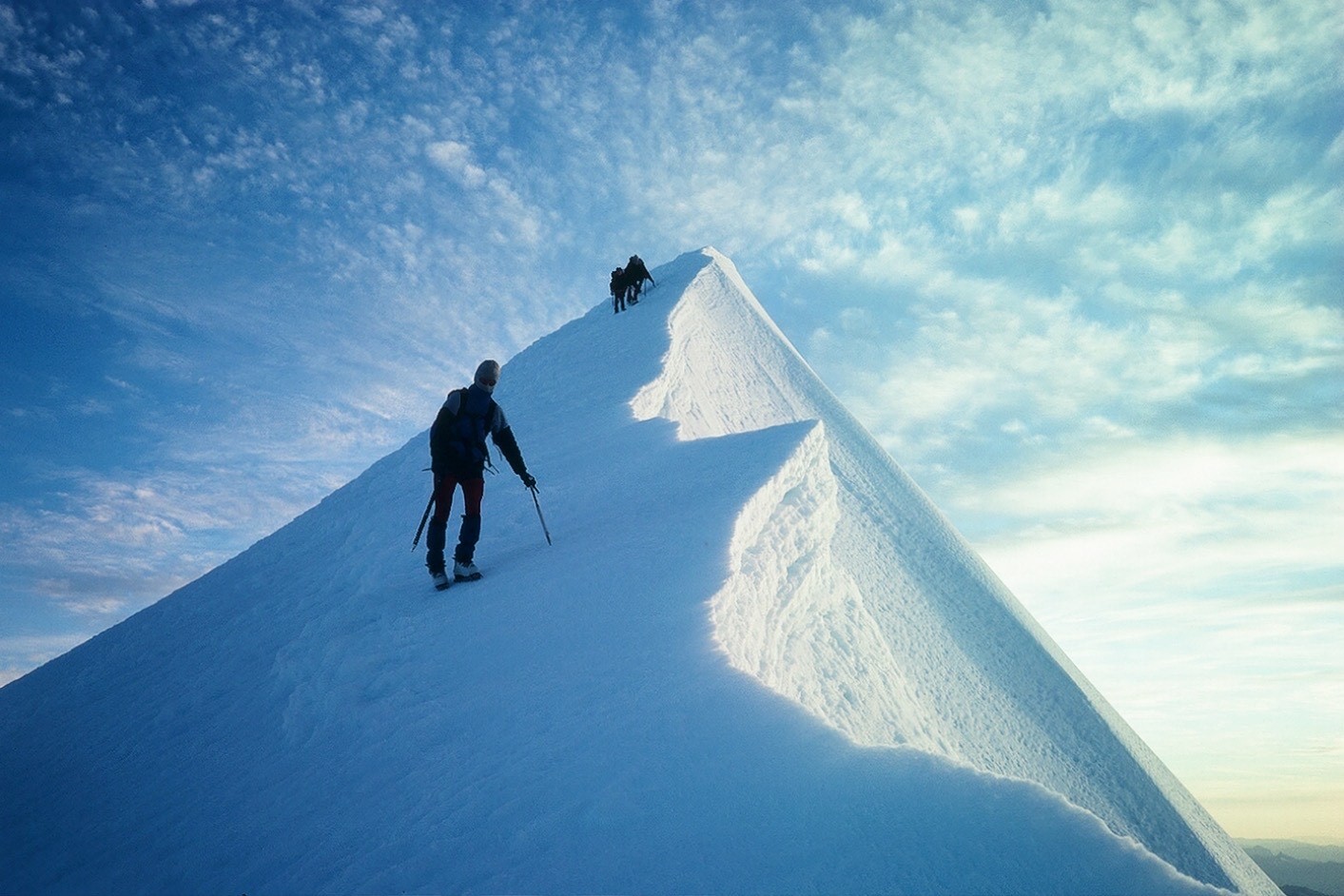
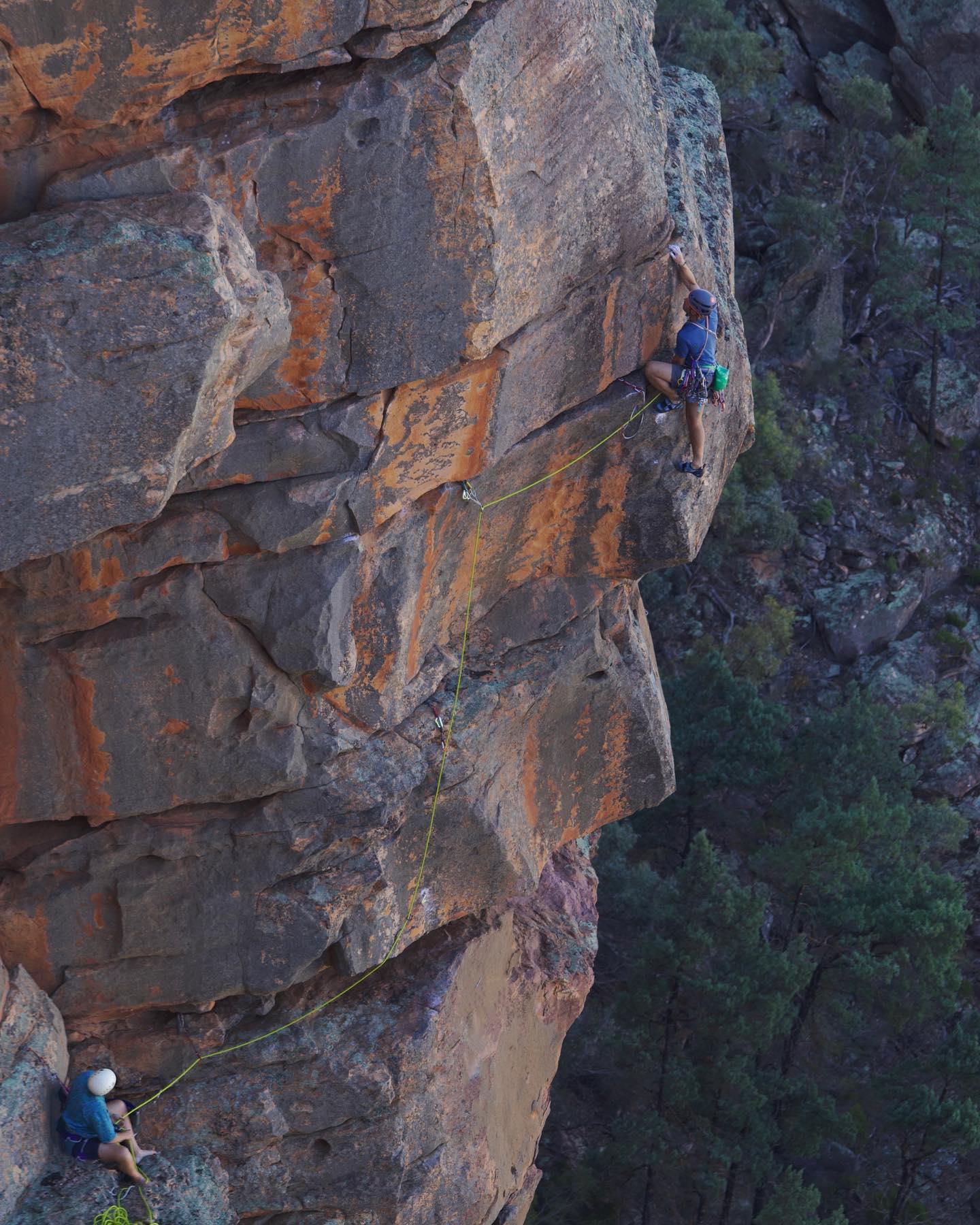
Unquestionably Dave Nelson, who ran the climbing elective at Pembroke. A whole generation of good climbers came out of Pembroke largely thanks to Dave. He was a good, no-nonsense climber with loads of alpine and rock experience around the world. We did some outrageous stuff on supposed school trips. He’d borrow the school LandCruiser for long weekends new routing in the Flinders, and even took us alpine climbing in NZ when I was only 15. When the school found out about that trip, the principal wrote to my parents explaining it wasn’t school-approved and they accepted no responsibility if anything went wrong.
Also Roland Arsons, an American climber who spent a lot of time in Australia in the late 80s. He was a larger-than-life character, 6 foot 4, solidly built and looked more like an NFL player than a climber. But he was incredibly strong, climbing up to about grade 30, and exceptionally solid on hard trad routes. I remember a day at Arapiles when he was working his way along the cliff, ticking off hard routes as they appeared in the guidebook. When he got to Tjuringa, he simply racked up and onsighted it without any fuss. Anyone who knows that route will appreciate how impressive that was. Roland, more than anyone, showed me what was possible.
5. Can you describe your experience of building confidence through climbing?
So long ago I can’t really describe the experience at the time. But growing up when it was trad or top rope, there wasn’t much choice. You either made it through that challenge or you didn’t. Mentors like Dave and Roland were hugely influential. They didn’t play down the risks, but they didn’t make a big deal of them either.
6. What’s your fondest climbing memory anywhere in the world?
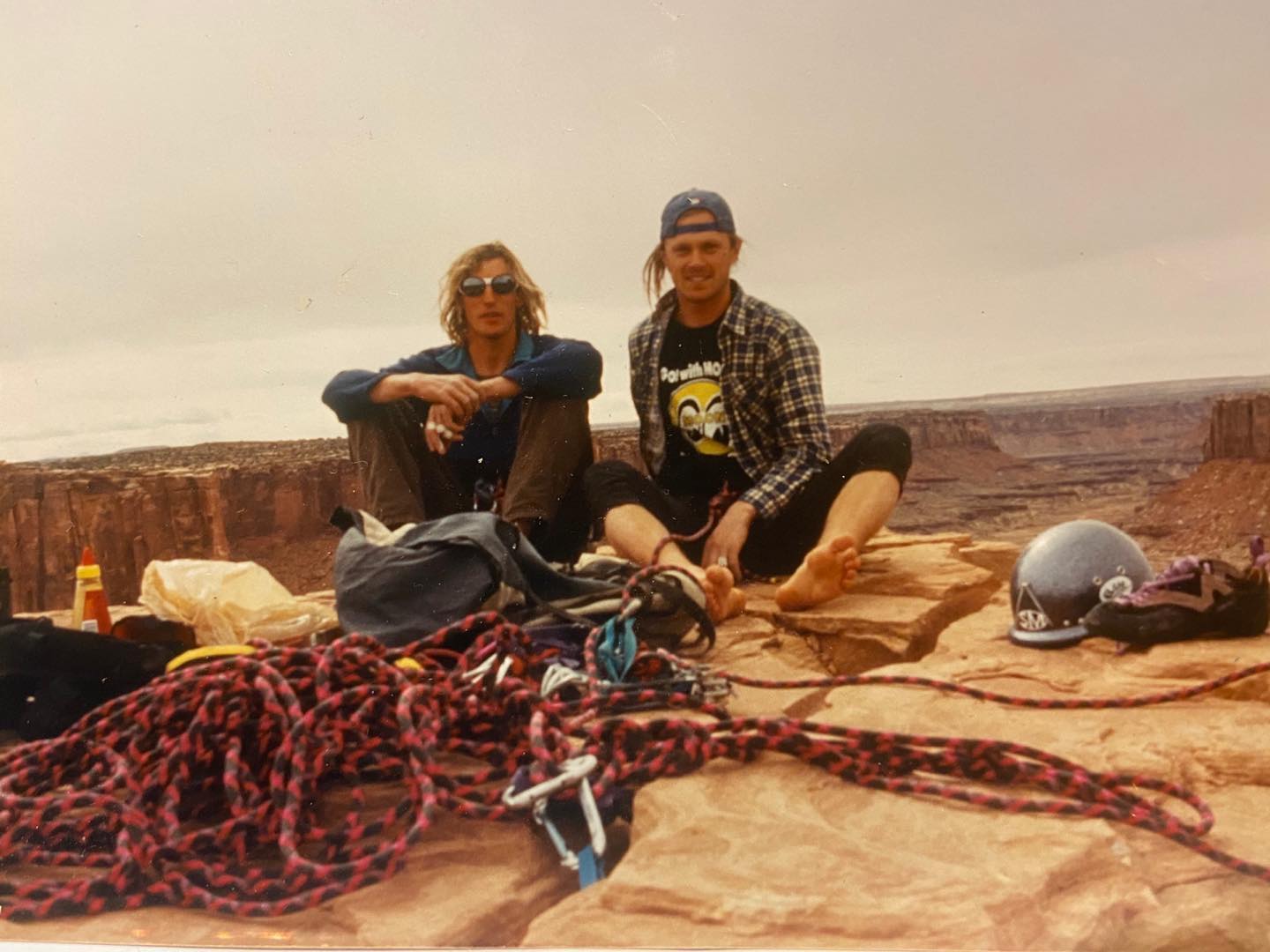
Doing Primrose Dihedrals on Moses in Canyonlands, Utah. I was on a road trip with an American friend, Shelton Gregory, and it was a perfect day, perfect climb. Just one of those climbs where everything clicked, swinging leads effortlessly and finishing on a perfect summit.
7. Do you have a pearl of advice for your younger self or people starting out on their climbing journey?
Remember to have a deload week every now and then! I used to train so hard without ever thinking about recovery. I’d climb until I burned out or injured myself, have a forced rest, then repeat the cycle again and again. I can now see how regular deloading helps maintain psyche as well as prevent injuries. Wish I’d known that when I was younger.
8. Do you have any info on the original BOLFA sign whereabouts?
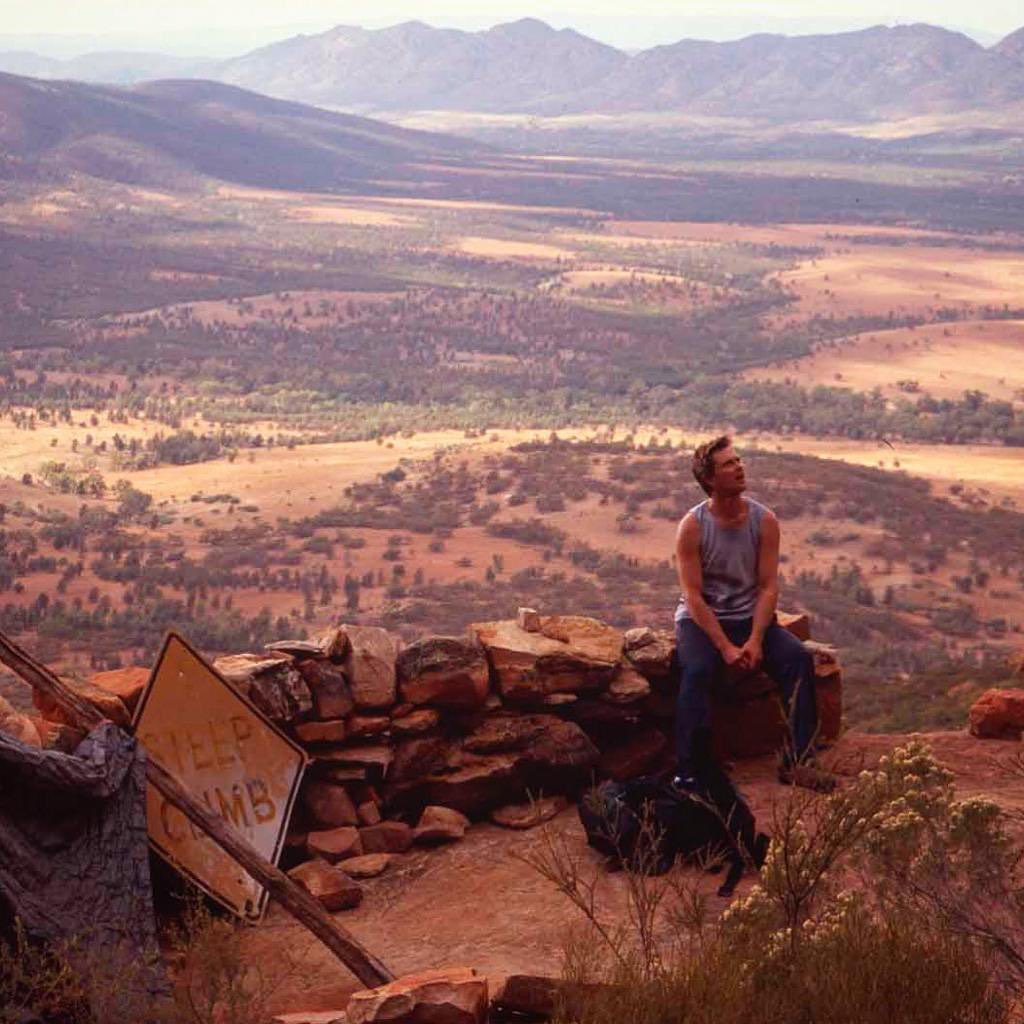
Yep. I wrote an article about it a few years ago. On my first trip to Moonarie in 1985, there were rumours it was somewhere near the track halfway up. Everyone had a crack at finding it because of the “mystery”.
In the freezing winter of 1989, Tim Fry and I were up there doing Womb Waltz and spent a lot of time climbing in the sun on the Great Wall. Tim spotted something white in the red sand near the Mushroom Boulder and was convinced it was the BOLFA sign. Turned out he was right.
We tried carrying it to top camp, but the original sign was big and heavy, so we abandoned it near the walk-up trail. It stayed there for a year or two until Matt Adams and a few others carried it down and drove it to Adelaide.
It lived in Matt’s garage with his woody until he moved out. According to Matt, he gave Fred Bonnet his woody and thinks Fred probably took the sign. Fred has since moved back to France, so I suspect it got junked somewhere. I’m sure it would have resurfaced by now if another climber had ended up with it.
A big thank you to Stuart for his time for Q & A BOLFA.
This BOLFA blog article is licensed under a Creative Commons Attribution-NonCommercial-ShareAlike 4.0 International license (CC BY-NC-SA 4.0).